Monday, February 2, 2015

You can take the Russian away from Russia, but...

I spent over three years working for an organisation that worked hard to fight stereotypes about Russians. Over that period, I wrote many articles about how so many of the said stereotypes were plain and simple unfair. In fact, these days, the chances of seeing a random drunk in Moscow's city centre on a working afternoon is a remote possibility.

So here, I am thousands of kilometres away from Moscow, in warm and sunny Kuala Lumpur, not thinking either of Russians or stereotypes and bang..

It is 5 pm and someone tries to open the door of my service flat. Not foreseeing any trouble, I open the door...only to see a 6 foot 3 inch drunken man calling himself Andrei walking in.  With him is a Central Asian woman speaking perfect and unaccented Russian.  She says her partner was renting this flat a day before (Not sure how they got on the floor, unless they rented another flat in the same floor).

I politely tell them that I am renting this place and the couple apologise and leave. I don't really know what to make of this, but given the size of that person, panicking and/or getting him agitated would have surely meant that I would have found the need to use my health insurance cover  for some injuries.

Calmness and conversations got me out of a lot of potential trouble in Russia, and today was no exception

Saturday, December 13, 2014

My pics on Flickr

It's a long, tiring and on-going process, but I am updating my Flickr account with pics from my travels.

Here is the link

Friday, October 31, 2014

Hidden gem in Siem Reap

The reason anyone ever goes to Siem Reap is to visit Angkor Wat. The largest and well-preserved ancient Hindu temple complex in the world is reason enough to visit Cambodia, but there is one hidden gem near Angkor Wat: Bayon!

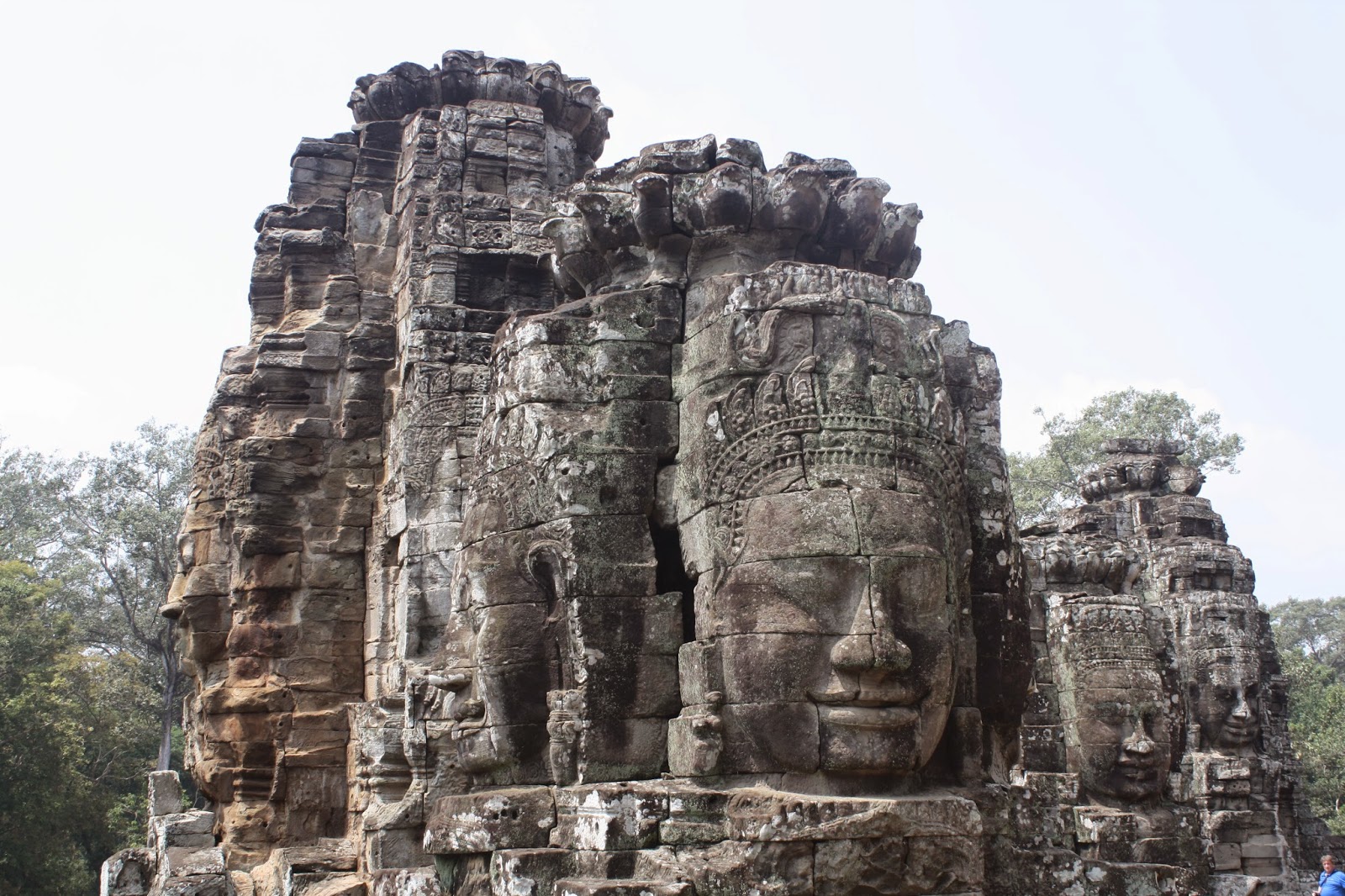
Nothing on earth could have prepared me for what I saw when I visited the temple, which went through periods of being Buddhist and Hindu, depending on the king of the day. The temple is full of human faces carved into stone. Some of them smile, others have plain expressions and I could even see a frown or two.

The entire temple consists of these faces and this looks like something right out of a fantasy fiction novel or film. Here is one such image from this temple


Musings on Angkor Wat

I have seen some spectacular temples and ruins in many Southeast Asian countries, from Bagan in Myanmar to Borobudur and Prambhanam in Java. Angkor was really the last of the great sites that I hadn't been to. It turned out to be the piece de resistance, not so much for the magnificent architecture per se, but for what was inside.

The intricate wall carvings of the story of the asuras and devas churning out nectar, as well as scenes from Ramayana and Mahabharata, set this temple out from anything else in Southeast Asia. It's amazing how much soft power and reach ancient India had far and beyond what are its boundaries in 2014.

Visiting this great temple, has awakened an interest in me to know more about Hindu stories. They really are a treasure.

The Angkor Wat carvings are the reflection of artistic genius and prowess that remains unparalleled to this day. It makes you realise one thing. The modern nation-state is a 19th century European construct that was imposed on Asia. We never had borders, passports and national id cards. When Buddhist monks wanted to come to India 150 years ago to follow the footsteps of the Buddha, no one stopped them to check for identity papers.

Culturally and spiritually, India and Southeast Asia are one. 

Impact of tourism on Cambodia's floating villages

The Tonle Sap is Cambodia's most important river and lake system, and being close to Siem Reap, is a major magnet for tourists.  The primary reason people visit the lake is to see the so-called floating villages with stilt-houses.

These were basically simple structures in the past, but tourism has helped the people in these villages become quite wealthy.  Many of the houses are large and some of them have even been converted into hotels.

I saw some houses that had gardens with bougainvillea plants! So how do these posh houses get electricity? By using car batteries of course!

The richest people in the villages, buy canisters of drinking and potable water, while those still down the wealth chain clean the water from the lake! Given that these villages are not very crowded, the water isn't terribly polluted and does not stink. Here is an image of a 'middle class house.'


Wednesday, October 22, 2014

Cambodia's dual pricing system

Many countries have a dual pricing systems for foreigners and locals at tourist attractions. India charges an exorbitant amount to tourists visiting the Taj Mahal, something I clearly oppose.

Cambodia takes this dual pricing to another level. Foreigners are expected to pay for everything in U.S. dollars. Right from "tuk tuk" rides to restaurants and hotels to entry at heritage sites and museums.

The logic behind this is that poor Cambodians need money from rich foreigners. I perfectly understand that the country is still recovering from the terror of the Khmer Rouge and Vietnamese occupation, but it's about time that it ensured that the U.S. dollar is not legal tender. Only when it starts making visitors use the local currency, will the country ever rise to the level of neighbouring Thailand.

Don't follow an official rip-off policy, my dear Khmer friends!

Tuesday, October 21, 2014

E-visa for Cambodia

While doing some research on whether taking an e-visa or going for a visa on arrival, I saw a lot of people claiming the latter was a better option.  Many travellers were told that the e-visa was not valid when they landed in Siem Reap or Phnom Penh.  The e-visa site was reportedly hacked a few times.

I decided to apply for an e-visa through the official website and I can vouch for the fact that this is a simple and easy process.

Once our flight landed, we zipped through immigration in 30 seconds. They scan the barcode from the visa and then stamp the passport. Fortunately the immigration officer did not ask me for a tip. Many travellers have complained about this.

The U.S. dollar is used as a legal tender for foreigners in the country, so don't bother exchanging currency in the country.